

PujaPurohit
 Select Location
Breaking a 70 Year Silence: Pakistan's LUMS University Revives Sanskrit Studies
12 Dec 2025 • 1 min read

Agent47
Author

 1086
1086 1086
1086
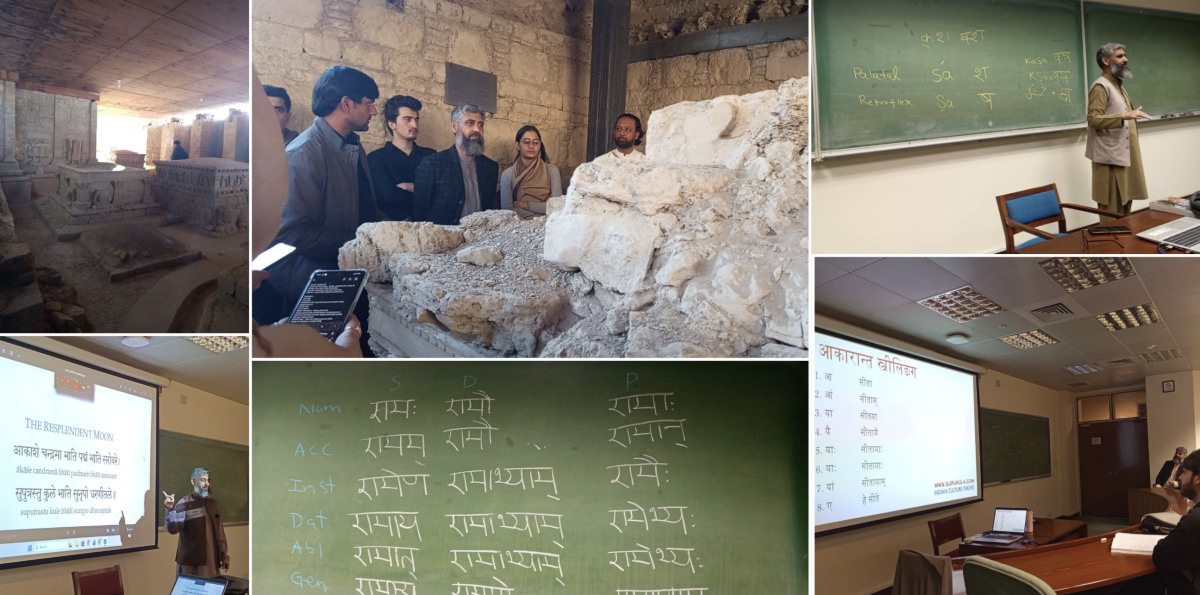
A photo of LUMS university campus, possibly with Sanskrit script overlayed subtly.
A Historic Revival: Sanskrit Returns to Pakistani Academia After Seven Decades
In a move that resonates with centuries of shared history, the Lahore University of Management Sciences (LUMS), one of Pakistan's most prestigious institutions, has successfully concluded its inaugural "Introduction to Sanskrit" course. This landmark event, hosted by the university's esteemed Gurmani Centre for Languages and Literature, is far more than a simple curriculum addition—it is a powerful act of cultural and intellectual reconnection.
For the first time since the Partition of 1947, a major university in Pakistan has formally opened its doors to the study of this ancient classical language. This revival breaks a silence that has lasted for over 70 years, representing a significant cultural and academic milestone. The successful completion of the course signals a renewed interest in exploring the deep linguistic roots of the subcontinent and acknowledging the rich, intertwined heritage that predates modern political boundaries. It is a quiet but profound step towards academic inclusivity and historical scholarship in the region.
Key Details of the Program
🏛️
The Institution
Offered at the prestigious Lahore University of Management Sciences (LUMS), a leading private university in Pakistan.
📚
The Organizing Body
Hosted by the university's renowned Gurmani Centre for Languages and Literature.
⏳
Course Duration
A comprehensive three-month program designed to introduce students to the classical language.
🏆
Historical First
The first formal university-level Sanskrit course offered in Pakistan in over 70 years.
A Timeline of Sanskrit in the Region
1
Pre-1947
Sanskrit was an integral part of academic and literary studies in universities across the Indian subcontinent, including in regions that are now Pakistan.
2
1947: The Partition
Following the creation of Pakistan, formal academic instruction of Sanskrit ceased in the new nation's universities, creating a 70+ year gap.
3
The Hiatus (1947-2020s)
For over seven decades, the language was absent from the formal curriculum, severing a direct academic link to a significant part of the region's linguistic heritage.
4
Today: The LUMS Initiative
The Gurmani Centre at LUMS reintroduces the language, bridging the historical divide and opening new avenues for research and cultural exploration.
More Than Just a Language: The Cultural Significance of Reviving Sanskrit
The reintroduction of Sanskrit at LUMS is far more than a simple expansion of the curriculum; it is a profound act of cultural and historical reclamation. For decades, the narrative of the subcontinent has been heavily influenced by the divisions of 1947. This initiative courageously looks beyond that timeline, acknowledging a deeper, shared linguistic and cultural heritage that binds the people of South Asia together. Sanskrit, as a classical root of numerous modern languages including Punjabi, Sindhi, and Hindi, is a testament to this common ancestry.
By offering this course, LUMS is fostering a more inclusive and comprehensive understanding of the region's past. The study of Sanskrit unlocks a vast repository of knowledge that is foundational to South Asian civilization. This includes:
Ancient Philosophy: Providing direct access to the philosophical schools of thought that have shaped regional ethics and metaphysics for millennia.
Classical Literature: Opening up a world of epic poetry, drama, and stories that have been retold and adapted across different cultures and languages in the subcontinent.
Scientific Texts: Allowing scholars to explore early treatises on mathematics, astronomy, and medicine that originated in the region.
This academic pursuit has the powerful potential to serve as an intellectual bridge, breaking down cultural and political barriers. It creates a common ground for dialogue and encourages academic collaboration between scholars in Pakistan, India, and beyond. When institutions prioritize knowledge over politics, they pave the way for mutual respect and a more nuanced appreciation of one another's history.
Ultimately, this move highlights the vital role of academia in preserving and exploring diverse historical narratives. Universities like LUMS act as custodians of intellectual curiosity, ensuring that the rich, complex, and often intertwined histories of our world are not forgotten or simplified by political agendas. Reviving Sanskrit is not about looking backward, but about building a more informed and interconnected future.
Celebrate the Resurgence of Sanskrit with a Traditional Puja, Guided by pujaPurohit
The revival of Sanskrit at LUMS is a momentous occasion, echoing the rich cultural heritage of the subcontinent. Honor this resurgence with a traditional puja performed by our experienced pandits. We provide everything you need – authentic rituals, sacred mantras, and all necessary samagri – ensuring a truly fulfilling and spiritually enriching experience. Let pujaPurohit help you connect with the profound wisdom and beauty of Sanskrit tradition.
✓ Expert Sanskrit Scholars
✓ Authentic Vedic Rituals
✓ Complete Samagri Provided
Looking to the Future: What's Next for Classical Studies in Pakistan?
The successful completion of the Sanskrit course at LUMS is more than just a single academic achievement; it's a potential spark for a much larger intellectual renaissance. The question now is: will this pioneering step inspire other institutions across Pakistan to follow suit? One can hope that this initiative creates a ripple effect, encouraging other universities to explore not only Sanskrit but also other classical languages like Pali and Prakrit, which are deeply intertwined with the region's history.
The potential impact on various academic disciplines is immense. For historians, direct access to classical texts offers a more nuanced understanding of the subcontinent's pre-Islamic past, unfiltered by colonial or modern interpretations. For linguists, it opens up new avenues for tracing the etymological roots of Urdu, Punjabi, and other regional languages. Scholars in comparative literature could uncover a wealth of shared narratives and philosophical traditions that connect cultures across modern borders.
Ultimately, this revival is an investment in the future. By re-engaging with its classical heritage, Pakistan is equipping a new generation of scholars and students with the tools to build a more comprehensive and inclusive understanding of their own history and identity. It is a hopeful step towards fostering academic curiosity and building intellectual bridges that transcend time and politics.
Common Questions About the LUMS Sanskrit Course
A photo of the 'Introduction to Sanskrit' class at LUMS, showing students and the instructor.
Griha Pravesh Puja Muhurat, Samagri List, Cost & Vidhi Explained
Book Griha Pravesh Puja at home with verified Pandits. Complete vidhi, samagri list, auspicious muhurat 2026, Vastu Shanti, Navagraha Puja & Havan. Housewarming puja booking online from ₹1,800."

Hanuman Chalisa: Meaning, Benefits, and Recitation Guide, Book Sundarkand path with pujaPurohit for Divine Protection
Discover the profound meaning, benefits, and a step-by-step recitation guide for the Hanuman Chalisa. Learn how this sacred hymn by Tulsidas can bring strength, peace, and protection into your life. Book an experienced pandit for a Sundarkand Path at home with pujaPurohit.

Bringing Puja to Your Fingertips: How to Download Puja Purohit App
Download Puja Purohit app and book pandits for pujas from home with ease. Get trusted services at your fingertips.
चैत्र नवरात्रि 2026: घटस्थापना मुहूर्त, तिथियां और पूजा विधि संपूर्ण जानकारी
चैत्र नवरात्रि 2026 कब शुरू हो रही है? जानिए घटस्थापना का शुभ मुहूर्त, 19 मार्च से 27 मार्च तक का पूरा कैलेंडर, पूजा विधि और महत्व।

Saraswati Puja 2026 Vidhi, Samagri, Muhurat, Mantras, Benefits & Cost
Saraswati Puja on Basant Panchami: Vidhi, Samagri, Muhurat, mantras, benefits & cost. Book pandits on Pujapurohit for knowledge blessings.
Your spiritual need,
just a tap away.

Your spiritual need,
just a tap away.