





The Misconception of 'Religion' vs. The Reality of 'Dharma'
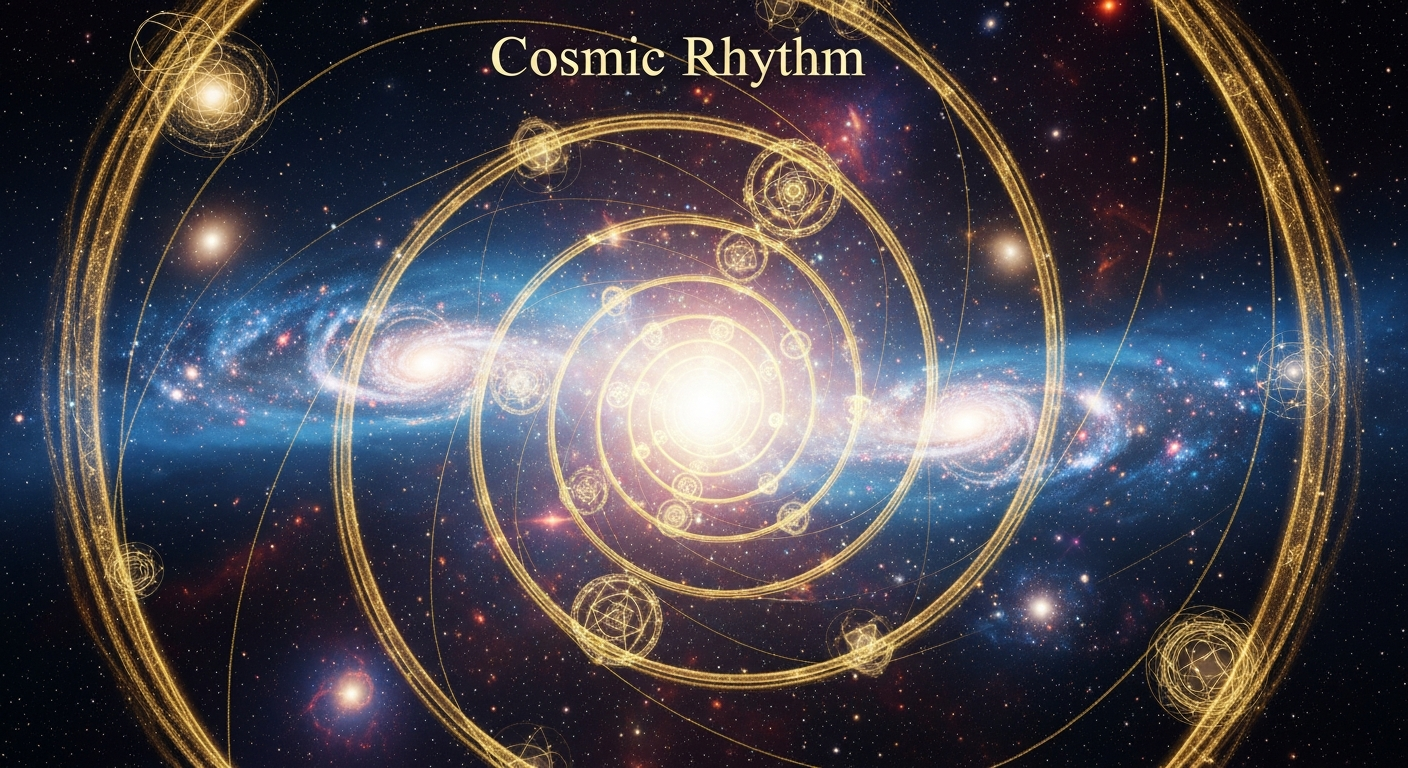
In the modern lexicon, we often equate Sanatan Dharma with "Hinduism," categorizing it neatly alongside other world religions. However, this is a linguistic and philosophical error of immense proportions. To understand the cosmic rhythm, one must first untangle the semantics.
The Concept of 'Religion'
Root: Latin Religare (To bind).
Religion is historically viewed as a set of doctrines, a specific book, or a prophet that binds a community together. It usually has a start date in history and demands adherence to a specific dogma or belief system to be considered a member.
The Reality of 'Dharma'
Root: Sanskrit Dhri (To sustain/uphold).
Dharma is not a belief; it is the inherent nature of reality. It refers to the cosmic laws—like Gravity or Thermodynamics—that hold the universe together. It requires no conversion, only alignment with the truth.
Sanatan Dharma, translating to "The Eternal Duty," is not merely a faith one joins; it is the observation of universal laws. Just as gravity applies to you regardless of whether you believe in it, the laws of Karma (cause and effect) and cyclical time function independently of human acceptance.
The Cosmic Operating System
"If religions are software applications installed at specific points in history, Sanatan Dharma is the Operating System of the universe. It was present before humanity existed, and it will remain long after civilizations fade."
A Timeline That Dwarfs History: 311.04 Trillion Years
While modern history books and major world religions track time in millennia—often capping their narratives around 2,000 to 6,000 years—Vedic cosmology operates on a scale that staggers the human imagination. Sanatan Dharma does not view existence as a short, linear sprint from creation to apocalypse, but rather as an eternal, rhythmic dance of the cosmos.
The Scale of Existence
Modern Linear Time
~2,000 - 6,000 Years
Views time as a straight line with a definitive beginning and end. History is often confined to recorded human civilization.
Vedic Cosmic Time
311.04 Trillion Years
Views time as Kalachakra (The Wheel of Time). This figure represents the lifespan of the universe (the life of Brahma) before dissolution and rebirth.
This vast timeline is structured around the concept of Yugas (epochs). Just as the seasons cycle on Earth, the universe breathes in cycles of creation and dissolution. We move through the Satya, Treta, Dwapara, and Kali Yugas, not towards a final judgment, but towards renewal. This cyclical nature suggests that our current existence is merely one beat in an eternal cosmic rhythm.
The Philosophy of Humility
Despite these precise astronomical calculations, Sanatan Dharma retains a profound philosophical humility absent in rigid dogma. The Nasadiya Sukta (Hymn of Creation) in the Rig Veda concludes its inquiry into the origin of the universe not with a command, but with a question:
"Who really knows? Who can here proclaim it? Whence was it produced? Whence is this creation? ... The One who looks down on it, in the highest heaven, only He knows—or perhaps even He does not know."
This acceptance of the unknown transforms Sanatan Dharma from a mere belief system into a relentless pursuit of truth.
The Four Pillars of Knowledge: Decoding the Vedas
To understand Sanatan Dharma, one must first unlearn the Western definition of "scripture." The Vedas are not commandments carved in stone by a deity, nor are they the biography of a single prophet. They are, quite literally, the Manuals of the Cosmos.
In the Vedic tradition, these texts are classified as Shruti—meaning "that which is heard." The ancient Rishis (seers) did not compose the Vedas; they discovered them. Much like a physicist does not invent gravity but observes and mathematically describes it, the Rishis meditated upon the fabric of the universe and "heard" the eternal vibrations that structure reality. These vibrations were codified into Sanskrit mantras, preserving the sonic blueprint of existence.
Far from being mere religious books, the Vedas represent a comprehensive library of science, philosophy, ritual, and art. They are the four pillars that hold up the roof of Dharma, each serving a distinct function in the rhythm of life:
The oldest and most foundational text. It contains hymns dedicated to the forces of nature (Agni, Vayu, Indra), symbolizing the Cosmic Order. It explores the nature of reality and the origin of the universe.
The manual of action. It focuses on Ritual and Sacrifice (Yajna). It bridges the gap between the internal spiritual world and external action, teaching how to apply knowledge through disciplined karma.
The Veda of melodies and chants. It transforms the texts of the Rigveda into music. It emphasizes that the universe is vibration, teaching Devotion and Meditation through the power of sound and song.
The book of daily life. Unlike the others, it deals with Material Sciences, including medicine (Ayurveda), sociology, economics, and statecraft. It guides humans on how to live prosperously in the material world.
Collectively, these texts do not demand blind faith. Instead, they invite the seeker to experiment with the laws of nature, sound, and action to align their individual life with the eternal cosmic rhythm.
Shakti and Wisdom: The Vedic Perspective on Women
Critiques of Sanatan Dharma often conflate later social stagnation with original philosophy. However, the foundational texts tell a different story. In the Vedic worldview, the feminine is not merely a helper but the very fabric of reality—Shakti (energy) without which Shiva (consciousness) is inert.
The Divine Duality: Ardhanarishvara
Sanatan Dharma envisions the Supreme Being as Ardhanarishvara—half man and half woman. This symbolism confirms that the masculine and feminine are equal, inseparable halves of the same truth. In Vedic rituals, a man is often considered incomplete without his wife (the Sahadharmini), and no major Yajna (fire sacrifice) yields fruit unless performed by the couple together.
Restoring Vedic Rights
While medieval periods saw a decline in women's rights due to cultural invasions and rigid dogma, modern reformists like Swami Dayananda Saraswati fought to reverse this. Citing Vedic authority, he argued that women have the inherent right to wear the sacred thread (Yajnopavita) and study the Vedas, dismantling the false narrative that scripture forbids female education.
Vedic Testimony: The Rigveda mentions roughly 30 Rishikas (female seers)—including Gargi, Maitreyi, and Lopamudra—who did not just study the scriptures but revealed Vedic mantras and challenged male sages in philosophical debates.
Acknowledging historical complexities is vital, but the core philosophy of Sanatan Dharma remains clear: the spirit (Atman) has no gender, and the cosmic rhythm relies entirely on the respect and power of the feminine.
Discover Your Personal Dharma
Sanatan Dharma is about aligning your life with universal laws. Consult our Vedic experts to understand your path.
Book a Vedic ConsultationA Holistic Science: Covering Every Perspective of Life
To categorize Sanatan Dharma merely as a "faith" is to overlook its vast, empirical foundation. It is better understood as a comprehensive technology for human well-being—a "living lifestyle" that harmonizes the microcosm of the human body with the macrocosm of the universe. Unlike rigid dogmas that demand adherence to a single book, Sanatan Dharma functions as a holistic science, weaving together biology, astronomy, and metaphysics.
The Science of Matter
It governs the physical through Ayurveda (the science of life), which treats diet not as ritual but as bio-chemistry tailored to individual body types (Doshas). It extends to Vedic Mathematics and Astronomy, which mapped planetary movements and the cyclical nature of time long before modern instruments existed.
The Science of Spirit
It integrates the spiritual via the universal laws of Karma (Cause and Effect) and Reincarnation. This is not divine retribution, but spiritual physics: every action generates a corresponding energy, driving the soul's evolution through successive births until liberation (Moksha) is achieved.
The Open-Source Philosophy
"Sanatan Dharma does not ask you to be a believer; it asks you to be a seeker."
Ultimately, this system is the world's oldest open-source philosophy. It invites Jigyasa (curiosity) and debate. It does not demand blind submission to a commandment but encourages the individual to question, experiment, and experience the truth personally. It is a journey from belief to realization.
Frequently Asked Questions
Q: What is the main difference between 'Religion' and 'Dharma'?
A: 'Religion' comes from the Latin Religare meaning "to bind" to a specific doctrine or book. In contrast, 'Dharma' comes from the Sanskrit Dhri meaning "to sustain." It refers to cosmic laws (like gravity or karma) that hold the universe together and exist independently of human belief.
Q: How does Sanatan Dharma view the concept of time?
A: Unlike the modern linear view of time (roughly 2,000–6,000 years), Sanatan Dharma views time as cyclical (Kalachakra) and eternal. It operates on a scale of trillions of years, moving through cycles of creation and dissolution known as Yugas.
Q: Are the Vedas considered just religious commandments?
A: No, the Vedas are not commandments or the biography of a prophet. They are considered "Manuals of the Cosmos" or Shruti ("that which is heard"). They represent discovered cosmic vibrations covering science, philosophy, ritual, and art, similar to how physical laws are observed rather than invented.
Q: What is the status of women in the Vedic worldview?
A: In the Vedic worldview, the feminine is viewed as Shakti (energy), without which consciousness is inert. The concept of Ardhanarishvara (half-man, half-woman) signifies that masculine and feminine are equal, inseparable halves of the truth, and ancient texts mention female seers (Rishikas) who revealed Vedic mantras.