

PujaPurohit
 Select Location
Shivratri 2026: The Night When Infinite Energy Became Creation
01 Dec 2025 • 1 min read

Agent47
Author

 984
984 984
984
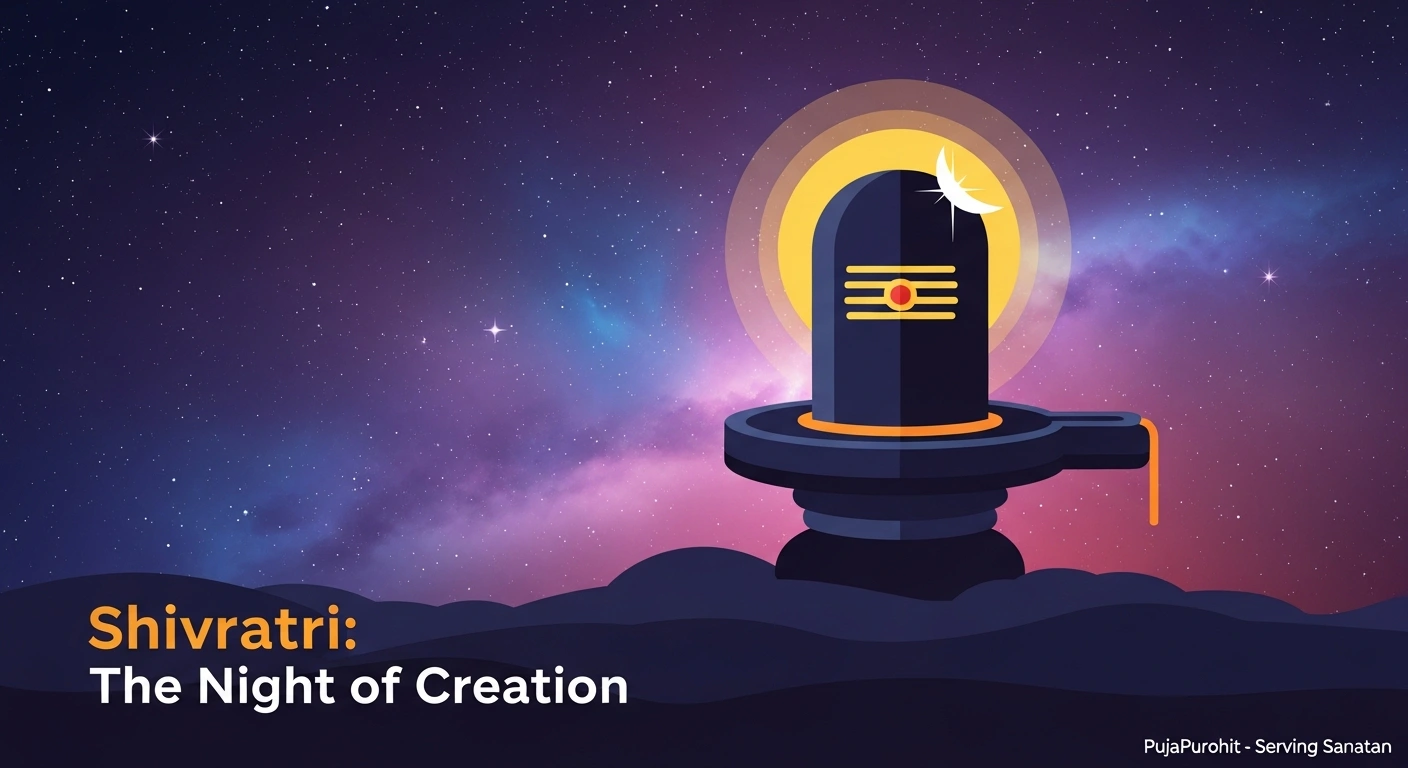
Shivratri: The Night When Infinite Energy Became Creation
In our previous blog, we explored the profound concept of Lord Shiva as the infinite, formless energy—the silent, pervasive consciousness that underpins all of existence. This raised a fundamental question that echoes through millennia: If Shiva is the formless potential, the unmanifested stillness, then how did this energy take form? Is it the same energy that created the entire universe? As the cosmic hum of a tanpura drone settles in our minds, we venture deeper into this mystery.
Tonight, we delve into the heart of Shivratri, a night known not for its darkness, but for its immense potential. This is not just a festival; it is a cosmic event. It is “The Night When Energy Became Creation,” a sacred moment when the infinite chose to manifest, sparking the dance of life itself. Let's explore the story, the science, and the spiritual significance of this powerful night.

The Mythological Narrative: A Tale from the Shiv Puran
The Eternal Pillar: Shiva's Formless Essence
To understand Shivratri, we must journey back to the primordial state described in the Shiv Puran (specifically, the Rudra Samhita – Srishti Khand, Adhyaya 8–9). Imagine a state beyond time, where there was no day or night, no creation or dissolution, no light or darkness. In this profound emptiness, there was only one reality: Shiva, existing in His Nishkal (formless) state. He was an infinite, unending pillar of brilliant light—the first Jyotirlinga.
In this cosmic stillness, two other divine energies, Brahma (the creator) and Vishnu (the preserver), emerged. A dispute arose between them over who was supreme. To resolve their conflict and reveal the ultimate truth, Shiva manifested between them as this magnificent, fiery pillar of light with no beginning and no end. Both Brahma and Vishnu attempted to find its extremities but failed, ultimately surrendering to the infinite nature of this energy. This formless pillar was the purest expression of Shiva's boundless, unmanifested consciousness.

Shivratri: The Dawn of Manifestation
Shivratri is the sacred night that marks the transition of this energy. It is the night when Shiva, for the first time, manifested from His formless Nishkal state into His Sakal (visible, formed) state. This was the birth of creation as we know it. The formless energy condensed into form, giving rise to the potential for stars, galaxies, and life itself.
As Shiva Himself states in the Puranas, in a verse that captures this cosmic event:
"First, I manifested as a pillar of light... Then, appearing in direct form, the creation began."
He declared that this particular tithi (lunar day) would be eternally sacred. Anyone who worships both His Lingam (the symbol of the formless, infinite energy) and His Vigrah (the formed, personal aspect) on this night would receive immense blessings, liberation, and fulfillment of their desires. Shivratri, therefore, is not merely the celebration of a deity, but the anniversary of creation itself—the moment potentiality became reality.
Bridging Myth and Science: Cosmic Echoes in Ancient Wisdom
But how does this ancient night align with what science tells us about the universe's birth? The parallels are astonishing and invite us to see this spiritual narrative through a modern lens.
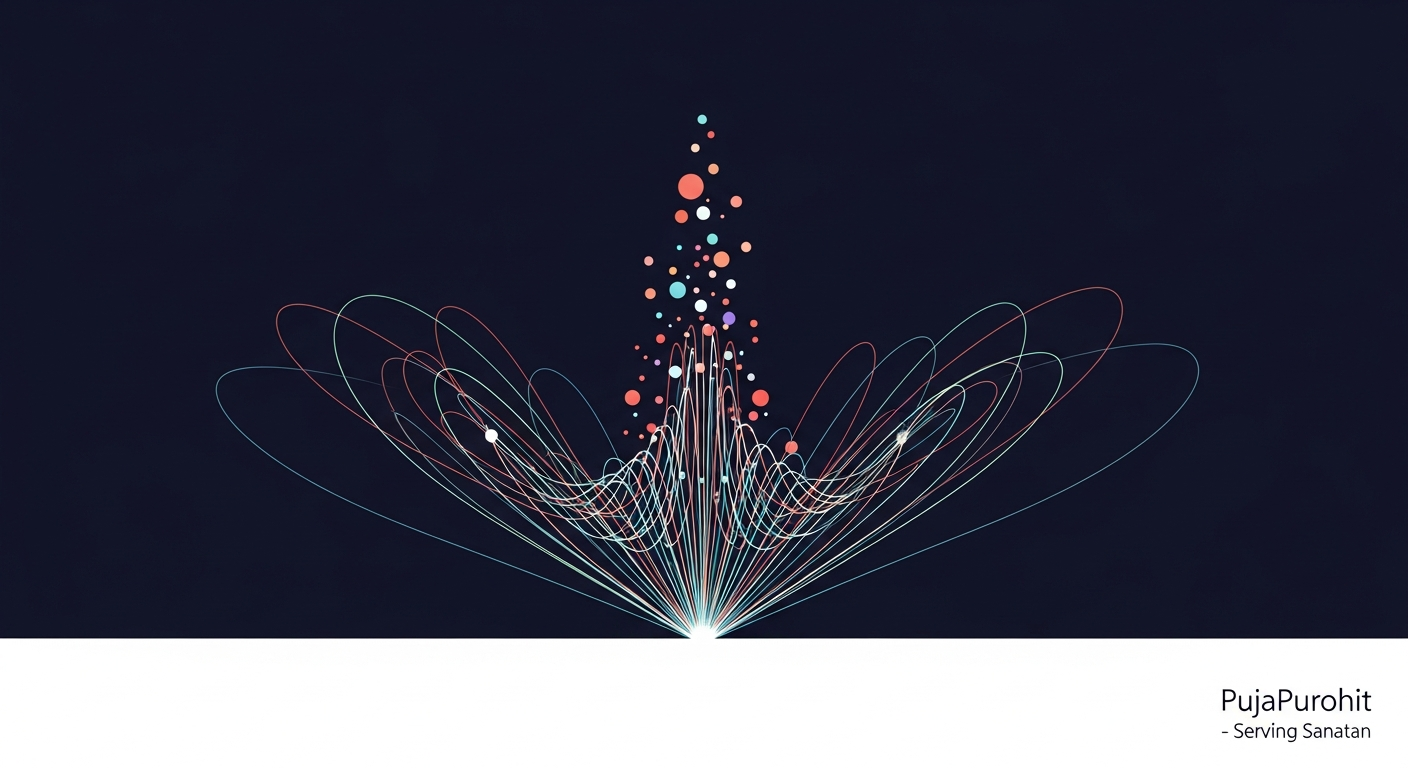
Quantum Echoes in Ancient Wisdom
Modern physics, particularly quantum field theory, describes a pre-universe state not as empty space, but as a field of pure potential. This quantum vacuum is a sea of latent energy, from which particles can spontaneously emerge due to fluctuations. The manifestation of Shiva's Jyotirlinga from a state of formless potential mirrors the concept of a quantum fluctuation, where pure potential energy gives birth to space-time from a single point of immense light and energy—an event we call the Big Bang.
From Infinite Potential to Visible Reality
The transition from Shiva's Nishkal to Sakal form can be seen as a metaphor for energy changing states. In physics, for work to be done and for matter to exist, energy must transition from a state of high potential (like the infinite stillness of the formless Shiva) to a state of lower potential (the motion and matter of the created universe). Shivratri represents this cosmic night of transformation, where consciousness took form, allowing the universe to unfold. It is the moment the universe gained its laws, its structure, and its potential for life.
Here are three ways Shivratri's story mirrors concepts in modern physics:
Energy Conservation: The idea that Shiva is the eternal, underlying energy from which everything manifests and into which everything dissolves aligns with the first law of thermodynamics—energy cannot be created or destroyed, only transformed.
Quantum Fluctuation: The spontaneous appearance of the Jyotirlinga from a state of 'nothingness' is conceptually similar to a quantum fluctuation, the proposed mechanism for the universe's origin.
Emergence of Matter: The transition from formless (Nishkal) energy to formed (Sakal) reality parallels the scientific understanding of how fundamental energy condensed into the matter that forms our universe.
Awakening Your Inner Shiva on Shivratri
Beyond the cosmic and scientific parallels, Shivratri holds a deeply personal significance. It is not a festival celebrating darkness, but a powerful reminder of the immense potential that lies dormant within us. The 'night' of Shivratri symbolizes the stillness of the mind. When we quiet the relentless chatter of our thoughts through meditation, fasting, and chanting, we create an inner environment where our own dormant creative energy—our inner Shiva—can awaken.
This is the night to turn inward, to connect with that same primordial energy that birthed the cosmos. It is an opportunity to dissolve our limitations, our ego, and our fears into the vastness of our own consciousness. Shivratri is the night when light chose to appear. On this night, we can choose to let our own inner light manifest.

Celebrate Mahashivratri with Expert Guidance
Looking to make your Mahashivratri truly transformative? Book a dedicated Pandit ji through Pujapurohit for authentic Shiv Puja at home. Our verified priests will guide you through the sacred rituals of Abhishek, Rudrabhishek, and Lingam worship—ensuring blessings for prosperity, peace, and spiritual awakening. Easy online booking, affordable packages, and available pan-India. Visit https://pujapurohit.in/puja-service/pandit-for-rudrabhishek-puja or call us to reserve your slot today. Let this Shivratri be the night your energy manifests miracles! ✨
Conclusion: The Night of Infinite Possibilities
Shivratri is a profound celebration of the universe's grand design—from the formless to the formed, from silence to symphony, from potential to reality. It is a night that bridges ancient myth with modern science, reminding us that we are all born from that same singular, divine spark. As you observe this sacred night, may you feel the cosmic echo of creation within you and awaken to your own infinite potential.
Share your Shivratri experiences and reflections in the comments below!
Frequently Asked Questions (FAQs)
Q1: What is the core significance of the Shivling on Shivratri?
A: The Shivling represents Shiva's Nishkal (formless) aspect—the infinite pillar of light or cosmic energy from which all creation emerged. Worshipping the Shivling on Shivratri is a way to honor the fundamental, unmanifested source of the universe before it took form.
Q2: How does the Shivratri story connect to quantum physics?
A: The story's depiction of a formless, potential energy (Shiva) manifesting as a pillar of light (Jyotirlinga) parallels the quantum physics concept of a quantum fluctuation, where the universe is believed to have emerged from a field of pure potential energy.
Q3: Why is Shivratri celebrated at night?
A: The night symbolizes the primordial state before creation—a state of stillness and potential. It is also a time when the mind can more easily become quiet and introspective, making it ideal for meditation and connecting with one's inner consciousness, mirroring the awakening of Shiva's creative energy.
Q4: What is the difference between Shivratri and Maha Shivratri?
A: Shivratri occurs every lunar month on the 14th day of the dark fortnight. Maha Shivratri, or the "Great Night of Shiva," is the most significant one, occurring once a year in late winter (February/March). It is believed to be the night Shiva performed the Tandava, the cosmic dance of creation, preservation, and destruction.
Q5: When is Maha Shivratri in 2026?
A: Maha Shivratri in 2026 will be celebrated on Sun, 15 Feb, 2026, 5:04 pm - Mon, 16 Feb, 2026, 5:34 pm
Q6: What are some simple rituals one can perform at home on Shivratri?
A: You can observe a simple fast (with fruits and milk), chant the mantra "Om Namah Shivaya," meditate on a candle flame, or offer milk, water, and Bilva leaves to a Shivling if you have one. The key is to maintain a state of awareness and devotion.
.png?alt=media&token=2fba4a4f-1733-42de-ae7b-294b6655e626)
Raksha Bandhan 2024 :भद्राकाल में राखी क्यों नहीं बांधनी चाहिए?
ज्योतिषीय गणनाओं के अनुसार, इस साल 19 अगस्त को शुभ संयोग के साथ रक्षाबंधन के मौके पर भद्रा का साया रहेगा।

Bringing Puja to Your Fingertips: How to Download Puja Purohit App
Download Puja Purohit app and book pandits for pujas from home with ease. Get trusted services at your fingertips.
Why Do We Place Kalash in Ganpati Puja? Significance and Rituals for Ganesh Chaturthi 2025
Discover the profound significance of placing a Kalash in Ganpati Puja for Ganesh Chaturthi 2025. Learn about its symbolism, Vedic rituals, and the correct muhurat. Book a verified pandit with pujaPurohit for an authentic celebration.
Why is Butter Applied to Hanuman Ji?Know the significance & Benefits
Discover the story behind sacred tradition of applying butter to Hanuman idols in temples and its benefits.
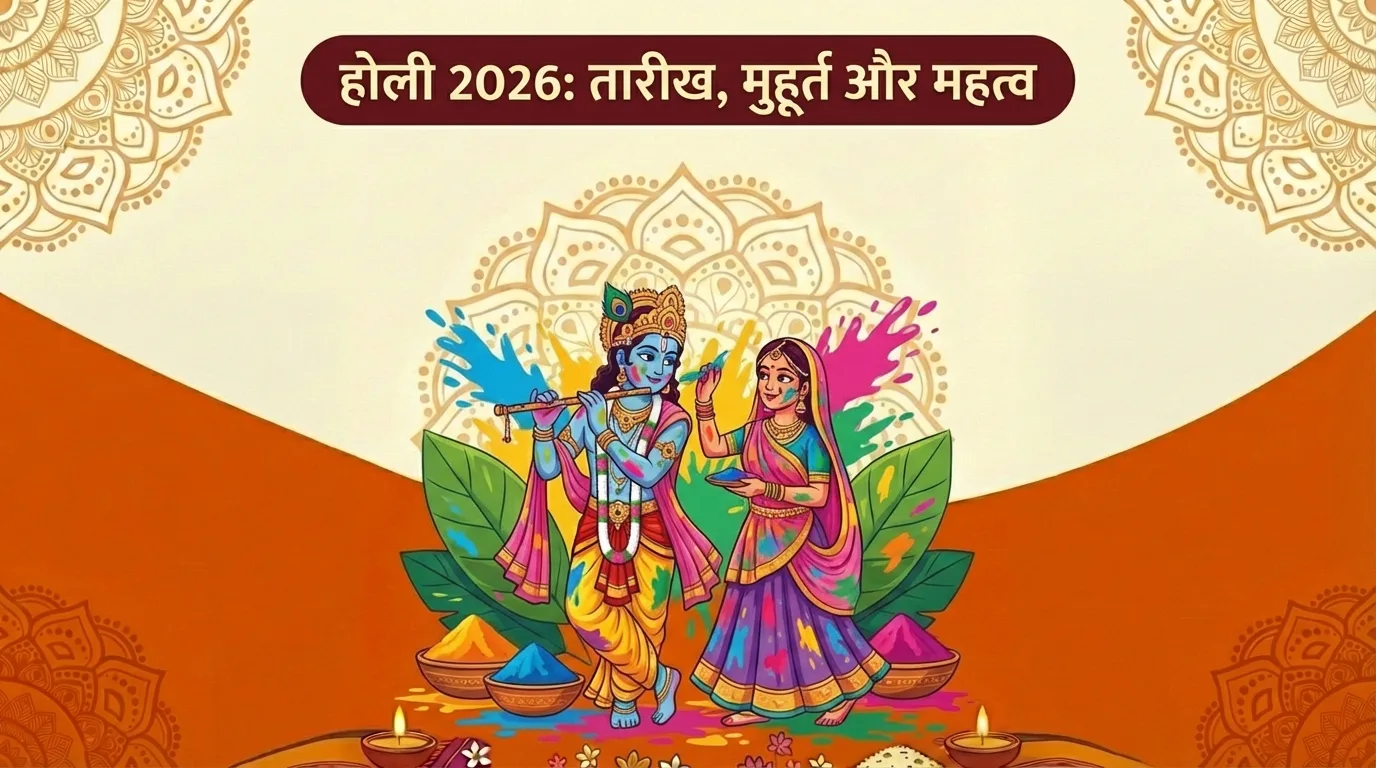
होली 2026: होलिका दहन शुभ मुहूर्त, तारीख और पूजा विधि | Holi 2026 Guide
जानें 2026 में होली और होलिका दहन कब है। शुभ मुहूर्त (March 3), पूजा विधि और महत्व के बारे में पूरी जानकारी। PujaPurohit के साथ अपनी पूजा सफल बनाएं।
Your spiritual need,
just a tap away.

Your spiritual need,
just a tap away.